Friday, October 30, 2015

[Japan 2015] Japanese Roller Coaster Ride (Lilo & Stitch anyone?)


So, excuse me for not posting as much. Between going to classes, watching Polar Bear cafe, making little trips to places here and there, I’ve found that I haven’t made time to blog as much (that and sometimes the urge hits me and the blog turns out shitty so I scrap it). Since there’s no real cohesive topic I wanna talk about I’ll just tell a few stories.

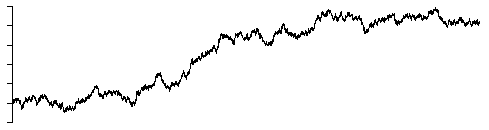
So actually the blog posts I’ve scrapped are usually centered around me learning Japanese, and the reason for that is that the experience changes from day to day. One day I’ll successfully complete an exchange at the supermarket and feel like on top of the world, the next day I’ll be talking to a friend in Japanese be so overwhelmed by the gap between what I want to say and what I can. Some days I’m just really confident and ready to talk to people. Some days I skip lunch because I don’t want to deal with ordering food in Japanese. It’s always a mixed bag of emotions and a good comparison would probably be Brownian noise, there are always ups and downs and I’m just hoping that the bigger picture is that my Japanese is improving.


I think this is the most multilingual community I’ve ever been around. All the foreign exchange students come from different countries (duh) so they speak their mother tongue, the exchange program is conducted in English, so most people can also speak English, on top of that, everyone’s doing their best to learn Japanese. It’s pretty incredible and it makes me feel lucky that I haven’t had to put much effort into learning English.


Another thing I’ve realized is that my Chinese is honestly not up to snuff, until recently I could get away with substituting words I didn’t know with their English equivalent, but being here makes me feel kinda lacking. It’s not a bad thing, for the first time I feel motivated to learn more Chinese. My mom always said that I would one day regret not paying attention in Chinese school, and yup, she’s right.

So the Japanese language has three main tiers of politeness: casual language (which I can’t for the life of me find the Japanese translation of), polite language (teineigo 丁寧語), and super polite language (keigo 敬語). Casual language is what you would typically use with your friends, family, or people who are younger than you. Teineigo is what you would normally use with acquaintances, people who are older, or in a higher position than you. I actually have a pretty hard time switching between casual and polite forms when I’m talking. Usually it ends up with me sounding emotionally distant with friends and unusually friendly with people in power.


The third tier, keigo, is something that you’d use with really really important people, or customers. So the thing with keigo is that when people speak keigo not only is it very beat around the bush (so it ends up making sentences really long), but also they’ll use politer versions of the words that you would typically hear. Since a foreigner would probably not have to use it in daily life (unless you’re in the service industry in Japan), it’s not really taught early on, I’ve had Japanese friends tell me that even they find it difficult to learn to speak.


So anyway, I went to the bank the other day to try to pay some bills, and since I’m the customer the lady taking care of me used keigo. She was trying to explain something about how I couldn’t set up automatic transfer through the branch bank and I could not understand a single thing. Since keigo makes everything longer it was just a slur of words that was spoken very fast with words I didn’t know mixed it. They must of thought I was an idiot or something, and honestly it did not occur to me until after the fact that I should of asked them to not use keigo.


Recently I’ve found myself developing a taste for matcha (抹茶). It’s a Japanese green tea that I personally find very different from the green tea that I’m use to. I was told (but not entirely sure if I’m correct) that matcha is a higher quality of green tea leaves. Usually it comes in a powder form that you would then mix with water, but I also think it comes in a teabag form. It’s also a very popular flavor here, it’s in things like Starbucks matcha lattes, matcha kitkats, matcha ice cream, and it’s a very interesting taste which I think goes really well with sweet things (which makes sense since drinking tea and eating sweets is a very Japanese tradition). I think the best part of matcha is the smell, I can’t really put it in words but it has a very distinct sweet smell. Anyway, I would recommend that you guys try it.

Thursday, October 29, 2015

[Japan 2015] Conversations, Natto, and Cats 会話とか、納豆とか、猫とか

10/27/15


下でにほんごのもうあります。


Today was an exceptionally good day. This morning when I went to my research lab I ended up talking to another lab member for a good hour. Maybe it’s a little silly to be happy because of such a simple thing but It was nice because normally the lab is really quiet. Everyone usually looks so serious that I usually sneak in and out without saying a word.


Since my Japanese isn’t very good yet and his English isn’t that great either, we communicated via a hodge podge of Japanglish. But today in particular the words left my mouth easier. Like when you don’t have to think as hard, translating, and forming grammar patterns in your head before you spit them out.


Right now the trees are changing colors in Japan. It’s really pretty and they have a special word for it: こうよう(kouyou)

After that I went to a Japanese conversation class called Nihongo no Mori (日本語のもり) that I’ve been frequenting since I’ve came here. How it works is you get paired up with a volunteer who you’ll talk to for a good two hours. I think this may be my favorite class, it’s kind of hard to find people who are not only willing to talk to you but also keep in mind that you’re not a native speaker. Things like speaking slowly, using not slang, saying things in different ways, throwing in some English here and there, waiting patiently as I look up a word on my phone, things like that.


Today however, was their 13th year anniversary and instead of the usual 2 hours, the conversation was 1 hour long and then we had a party. The senseis put together a bunch of gifts and we did amidakuji (あみだくじ) which is a ladder lottery game to decide who gets what fit.


I  was pretty lucky and got one of the larger bags. Inside was a peanuts Halloween diorama, soybean waffle snack, dish cloths, natto snacks, and natto. For those of you who don’t know, natto (納豆) is a fermented soybean type food that people usually eat with rice. Most foreigners dislike the taste, but I’ve grown up with it since my parents have occasionally kept some in the fridge since we left Japan 16 years ago. Anyway, the senseis are just some of the nicest people I’ve met and I’m so lucky to have found this class.


My big win.


Then on my way to the bus stop home, I found a cat. I’m not sure if it was someone’s pet but I went closer because… it’s so cute. It’s probably dangerous to touch random cats in the streets but when I got closer it started rubbing its body and walking around me in circles and I couldn’t help it… I ended up spending a few minutes petting it, and boy does it have the loudest purr I’ve ever heard a cat have. I honestly thought that it might of swallowed a bull frog.


Two cats, one bag.


After a while another cat appeared. It didn’t look like it wanted to be petted so I left it alone. I ended up naming the cats Kokononeko-chan and Sokononeko-chan. Which approximately translates to “the cat over here” and “the cat over there.”


今日はいい日だ。今朝、けんきゅうしつに行ってとなりの人を一時間しゃべった。けんきゅしつにはたいてい静かだ。みんなまじめだ。よく入って出て何も話さない。それでほかの人としゃべりして、うれしくなった。


私の日本語まだ上手じゃないで、彼の英語もあまりはなせない。そして英語と日本語どちも使った
、ちょうとおかしかった。でも今日話しやすい、どしてもわかんない。


あとで「日本語のもり」の会話教室に行った。日本語で二時間ぐらい色々な会話をして、とても楽しい。私が大好きい。先生たちはゆっくり話すし、スラングを使わないし、時々英語でせつめいするし、とてもやさしい。


でも今日は記念日だ。そして一時間だけ会話してしまって、パーティをさんかした。先生たちはプレゼントをじゅんびしておいた。学生たちはあみだくじでプレゼントをえらんでもらった。私のプレセントがすごく大きい。ピーナッツのハローワークのクラフトとか、枝豆のおかしとか、なっとうとか、色々な物がはいていた。


納豆が食べられる?そう。食べられる。子供の時日本で住んでいた。そしていつも母父なっとうが書いてくる。


うちにかえっていたとき、猫が二つ見た。しばらく猫と遊んだ。「ここの猫ちゃん」と「そこの猫ちゃん」名前をつけた。


日本人じゃありませんので、もしかしてまちがえました。正しいの教えて下さい。


Bonus cat pictures (ボナス猫の写真):


Wednesday, October 14, 2015

[Japan 2015] YOSAKOI 祭り


So this week’s felt like forever, but it’s only been my first week with classes. If time keeps passing like this I’ll be in Japan for a lifetime! There’s not much that’s terribly interesting to share on my classes…


So this weekend I went to YOSAKOI Matsuri(よさこい祭り)which was a festival with organized groups of dancers from all over Japan performing their routines to remixed Tohoku folk music with or without the following:


  1. Naruko(なるこ): I’m pretty sure that a majority of all the teams all had these, and the performers would keep them in their hands and as they’re dancing it would usually clap in time to the music.


Image from here


  1. Giant Flags: A lot of the groups had flag wavers that waved giant flags advertising their group name. The flag wavers were incorporated into the routine and had their own fancy moves for manipulating the flags (there was one group that juggled giant flags!). The analogy is a little bit like color guards for marching bands, only these flags were truly gigantic. The largest ones I think were about 5 meters tall. You would see flag wavers put their flags down in the middle of the routine when they have a slight pause and they’d be huffing and puffing. You could almost preemptively guess which groups were going to be good based on the size and number of flags they brought.
Now imagine something twice that size. Image from here.


  1. Kakegoe (掛け声): Kakegoe (which I just looked up) are shouts and calls used in traditional Japanese performances. It’s really awesome, and these people will like shout certain phrases at certain parts of the song, and after awhile you kinda know what’s coming too so you can shout along too (それそれそれそれ!)


  1. Singers/speakers: Some groups had people who stood on the side who would either sing, or perform poetry to the music. Groups without these people would just


  1. Multiple outfit changes: These people had some pretty fancy outfits already, but some of these groups took it to the next level by having multiple outfit changes. They’d rip open the velcroed part of their outfits and underneath would be a completely new outfit. The most outfit changes a team had that I counted was 3.


This group had a total of 1 outfit change?


  1. Musical Instruments: One group bought an entire jazz band with them. We had no idea until at the end when we saw a bunch of trumpet players exiting stage left. Another group had a bunch of people playing Taiko drums wrapped entirely in saran wrap (to protect them from the rain).


It actually rained the day we went, starting from a light drizzle to an “boy am I glad I brought my umbrella” (which I then forgot later in the day on the campus bus). The nice thing about the rain was that it soaked the floor in the free sitting zone near the stage so nobody wanted to venture in closer. But my friend and I decided to go in and a nice old man (in the corner of the image above) gave me a towel to wipe the floor with.


Initially we grabbed paid seats that were further from the stage but it was definitely more exciting closer to the stage. You notices things like, “wow everyone looks so happy to be here”, and you can actually hear the Naruko clap, and the performers shouting. Sometimes the flags get waved over your heads. It was super cool.


There was a variety of fair food (both Japanese and not) like lots of skewered things (beef, fish, dango, spiral potatoes), lots of curry, some ramen places here and there, shaved ice, I wish I knew the Japanese names but mostly I just pointed to indicate interest. I also just ate everything instead of taking pictures.


Bonus Video!

Sunday, October 4, 2015

[Japan 2015] A newb in Sendai


Being in Japan for me is like being in a RPG. Specifically, being in a map too high for my level. I finished Japanese 1 at Wellesley, that’s like the tutorial ground, where you slay a few slimes (or learn to read hiragana, katakana, and a few kanji), you have a bunch of friendly newbies (or classmates), and you’re like “I’m ready to take on the world!”


Somehow I’ve wandered into the “Japan map,” full of people who’ve been speaking Japanese for their entire lives. I’m just in total awe. I skirt around the city trying not to look too lost. The quests that I’m accepting (“get a haircut in Japan!”) have skyrocketed in difficulty.


I bought myself motivational notepads


We’ll do away with the RPG analogy now. I’ve been in Sendai City for about a week and here are just a few personal anecdotes.


Thank’s pirate samurai!


I am a monster. Just kidding. But I feel pretty tall here. I’m like 5’ 4” and that’s the average woman's height in America (or below average). Either way I don’t usually feel very tall, my entire family has a few inches on me, but here it feels like everyone (girls, sometimes boys) is under 5’. I feel this the most when I’m washing my hands. All of the sinks here hit me mid-thigh, and usually I end up splashing water all over my pants (and that’s when I notice!).


Side note, all public bathrooms have this machine that will automatically make this waterfall sound when you use the toilet, it’s suppose to cover up the sound of your pee (or poop) and make going to the bathroom more modest, but it’s so loud! I think it’s really there to ward off anyone who might want to browse their phones on the potty.


It’s the black one, pretty boring looking imo


I have a new bike. Well, a new used bike. It’s the first time I think that I’ve had a steel framed bike. It’s really heavy. It’s also the first time that I’ve had a presta valve on a bike. When I went to inflate it I was like “woah, I didn’t prepare for this” and then after using this weird clippy attachment thing I figured it out. Not sure if I’m doing it right, but hey, the tire’s inflating.


Clip attachment thingy


People here bike everywhere. Literally. On the left side of the road, on the wrong side of the road, on the pedestrian walkways, everywhere. And while there are bicycle laws in existence, it seems like the rule of thumb is “there are no rules, until someone gets hurt.” I also find it kind of weird that most bikes in Japan come with bells, but bikers weave in and out of pedestrian traffic like silent bike ninjas.


A bike parking lot


Also since everyone bikes, the lock your bike to a post idea doesn’t work (there aren’t enough posts!). Bike parking in Japan is actually a pretty big problem. When people park wherever sometimes it causes a huge blockade in pedestrian streets. So there are designated bike parking zones, and I tried to use a bike parking lot today. There’s like a slot that you can put your bike into that clicks and locks, and there’s this ticket machine you use to pay for your time. So I park my bike and try to pay for my parking spot, I put a 100 Yen coin in, it spits a 100 Yen coin out. Repeat. Repeat. Repeat. Omg I hope someone notices that I’m really confused and have no idea what I’m doing. Eventually I figure out that you pay after you come back, I mean, they have your bike hostage.

Bike parking machine


There’s a department store called Loft. From the name I thought it was like Japanese Ikea or some kind of fancy high end clothing shop that I could never afford. But! It’s actually like if someone picked my brain and created a department store with everything I’ve ever wanted and more. Like seriously. Everything here is so freaking cute. And it has all those weird things that you never knew you needed like thermos exclusively for soup, a umbrella that doesn’t get wet, stationary in every type of cute animal, a hand pillow disguised as a bear, everything.


Hand pillows disguised as sheep


blang blang


Finding manga is really hard. Before I got to Japan I (and every other foreigner) was like “it’s going to be manga paradise!” What you quickly come to realise is that everything is in Japanese and you have no idea where your book would be in this sea of really cheap graphic novels. I’ve done some research on the system, it’s organized by genre, publisher, imprint, author, title in Japanese alphabetical order. So armed with this knowledge, I walked into the store (BookOff) a second time more confidently. And of course I forget that the main problem was I can’t read Japanese (well). Looking for my books was a little like playing where’s waldo with kanji in a sea of kanji. I finally located where my book would be… if they had my book! Back to the drawing board!


So I picked out a children’s book “101 Japanese folk tales.” What I’ve come to find out is that children’s books are hard. I’m still on the first story and I’m finding myself looking up the meaning of different words every single sentence. And I wish that was an exaggeration.


昔々

Saturday, September 26, 2015

[Japan 2015] Initial thoughts: Being in Japan


So I’ve been in Japan for a little over a week now. The first week or so was spent traveling by myself in Osaka, Kobe, Nara, and Kyoto and now I’m finally settling down in my dorm room for the next few months. For those of you not in the know I’m studying abroad in Japan at Tohoku University this semester.


I’ve found out that traveling alone is lonely. Traveling alone in Japan is even lonelier. I remember on my first full day I was walking around and this wave of sadness just came over me. Here I am all alone in a country where I know no one. My Japanese sucks. I want to talk to someone.


Good thing that I had a schedule, a plan, so I wasn’t stuck moping in my hotel room by myself. Though doing touristy things by yourself isn’t as fun as doing them with other people. I would visit all the shrines, temples, tourist attractions, and I would spend my entire day taking pictures and walking. Most signs describing the significance of things were in Japanese so I just took more pictures. And when something happens (good, bad, funny) there's no one else to turn to and be like “omg can you believe that?” I wrote postcards to fill in that gap.


At first I was really afraid that people that people couldn’t tell that I was a foreigner (btdubs I look asian). What if they assume I have a full spectrum of communication? What if I offend them by doing the wrong thing? Am I supposed to say thank you when the waitress brings me the food? How am I supposed to even order food!?


I had a lot of anxiety over this. But as time went on I’ve come to realize that as soon as I open my mouth people know that I’m not from here. Whether I like it or not, I’m probably saying things wrong and have a foreign accent. And while I’m still kind of panicky about stuff like this, I can survive.


It’s really easy to fake understanding. Sometimes when I’m in conversations it doesn’t make sense to let the other person know that I don’t understand every other sentence. It’s like the same thing you do when you’re listening but not really, you just smile and nod and go like “ohhhhh.” it usually gets me by most things except when they’re asking me a question, and it's like GOTCHA. It’s also bad when I’m trying to get answers to my question since having a clear understanding seems to be relevant.


Another thing that I’m thinking of as school starts is how comfortable will I be adjusting? I think most people agree that when you’re in a foreign country that you should try to immerse yourself, learn the language, learn the culture, make friends with the people there, but when you’re there in the context it’s a little different.


I’m scared, I don’t really know I can end up making Japanese friends (In what context am I meeting them? (by the way classes here are entirely in English, so I don’t know how many native students are actually taking these classes) How do we communicate?) It’s so easy to default back on making friends with the other foreign exchange students, but then I feel like I’m cheating, that I’m not really doing it right. But what if I find that the language barrier is too high, and all the exchange students are settled down in their groups and I’m left over?

We’ll see.

Marketplaces in China


So I’ve spent a lot of my time in China in Chinese marketplaces called 市场 (shi4 chang3), that’s where we got our groceries for the day (daily groceries what an idea!). The closest thing I’ve seen in the U.S. is probably a farmers market, but those tend to have a reputation of being more higher end, organic, expensive, etc.

These marketplaces are comprised of multiple venders selling various things like fruits, vegetables, fish, meat, prepared foods (dumplings, etc.), and picked items.

Here we go!


So here’s the entrance to our marketplace, outside are parked a lot of different bikes and motorcycles (people in China are really into bikes and motorcycles; I’ve decided that when I graduate I want to get myself a scooter).


Here’s the fish vender. They’re usually organized by types of fish and sit on top of a bed of ice. The types of fish available are usually dependant on what was caught recently.


Here’s the fish guy cleaning the fish we just bought (ripping out its guts!). They do a really good, quick, clean job. I wish people did that in the states.


Baby? Squid! I like how shiny they are.


There’s also tons of shellfish! They’re usually alive when you buy them. They’re sitting in a vat of salty? water. You can occasionally find people who sell live fish too.


Here's what a butcher’s spot will look like. I’m not sure how to explain it well but they have this larger slab of meat (like in the upper left hand corner of this picture) and as people make purchases, they’ll carve portions of meat off and dice it up for you. I was pretty in awe by the fact that none of it’s refrigerated but I guess it’s slaughtered quite recently and most people will cook it the day of.


These marketplaces can also be outdoors. Here’s a vegetable vendor. Things are usually weighed on scales and are sold as price/kilo.


These people were selling bamboo shoots. It’s a little bitter tasting and the texture is of crunchy celery?


Here’s an example of a vendor selling picked items. We never bought any but they all look super yum. I wish I had a picture of a vendor selling cooked items like dumplings but I don’t. They usually have these ribbony things attached to fans to ward off all the flies.

AVERT YOUR EYES IF YOU ARE SQUEAMISH


Have I successfully warned you guys yet? Aside from live fish you can also get live poultry. Here's a picture of a duck that we bought for soup.


And here’s the guy cleaning our duck for us. I’ve got to say, the duck was very quiet during this entire process and the dude was extremely fast. I don’t think I have a strong opinion on this with regards to animal rights, I think it’s the difference between seeing it or having it behind closed doors.


This did however make me try to appreciate my food a little more.

Here’s our duck in a soup. Probably the freshest poultry I’ve ever had.

Saturday, September 19, 2015

Engrish, Dish Sanitizers, Mulan, and Zhong Yao


When we’re aboard we look for the things that are most familiar to us. Which is probably why bad English is hilariously everywhere in China. Since it’s like the only thing I can instantly read it sticks out like a sore thumb.

A hip modern café called “GRANDPA”

At home (Kansas home) we wash our dishes by hand. It’s not that we don’t have a dishwasher; we even bought a brand new dishwasher that we never use. At my cousin’s place in China there is no dishwasher, instead it’s replaced with a dish sanitizer, which not only sanitizes your dishes by bringing it to higher temperatures but also dries them and serves as a storage area. For a culture that mostly hand washes their dishes, it’s a brilliant idea.

Dish sanitizer!

Drivers here in China (or at least this part of China) are terrifying. People complain that Boston drivers are the worst in America, but really, it’s nothing compared to driving here. It’s rare that people ever use their signal lights, getting cut off is normal, everyone weaves in and out of traffic, crosswalks exist but are totally ignored (both by pedestrians and drivers), I don’t think I’ve seen pedestrian light yet, etc. My grandma and I were on our way to the marketplace and crossing the street was terrifying.
It was like that one scene in Mulan where Grandma Fa closed her eyes and crossed the road with the lucky cricket, only I was Grandma Fa, and my grandma was Cricket. She held my hand tightly as we inched across a busy crossway. It’s not even like cars will stop for you, they’ll swerve around you, and drive on sidewalks. But we made it safely to our destination and I took a few pictures while she bought our lunch.

I’ve been thinking what aspects of culture we pass on to our kids and what’s not, specifically my grandparents to my parents to me. In China people primarily drink hot water. Filtered water is first boiled before anyone starts drinking it. It might be for sanitary reasons, to make the water potable, but it is also traditional, hot water, hot tea, etc. What we do now at home (Kansas) is we filter our water using a Brita filter, boil it, and then stick it in the fridge (cold drinking water). Here in China I let my water cool down to room temperature and my grandma asked if I wanted to add more hot water in it. I think the explanation was something like cold water is bad for your health. This summer I lived in Arizona, since I’m lazy and have gotten used to drinking tap water at college I primarily drank unfiltered tap water with ice. That probably would’ve been a total no go here.

I’m not sure what it is but it’s probably good for me

Another thing I’ve been thinking about is eastern medicine vs western medicine, partly because I’m sick right now. My relatives have been loading me up with tons of Chinese medicine; yesterday I think I had 1 herbal tea, 1 herbal drink, 2 types of Chinese medicine pills, and ibuprofen. It sounds a bit excessive but I was being polite and didn’t say no. But that got me thinking about what I normally did when I got sick in the states. I’m pretty sure we do have expired cold medicine and cough syrup hiding somewhere in the house, but when me or my brother gets sick we primarily drink BanLanGeng (a Chinese herbal drink). I don’t know the active ingredients in it, and I don’t know if it actually does much to help, but it’s become habit. That’s basically our cold routine. I’ve been indoctrinated in it enough that I have a few bags at college that I’ll drink/offer skeptical friends who usually don’t drink it.