Saturday, September 19, 2015

Engrish, Dish Sanitizers, Mulan, and Zhong Yao


When we’re aboard we look for the things that are most familiar to us. Which is probably why bad English is hilariously everywhere in China. Since it’s like the only thing I can instantly read it sticks out like a sore thumb.

A hip modern cafĂ© called “GRANDPA”

At home (Kansas home) we wash our dishes by hand. It’s not that we don’t have a dishwasher; we even bought a brand new dishwasher that we never use. At my cousin’s place in China there is no dishwasher, instead it’s replaced with a dish sanitizer, which not only sanitizes your dishes by bringing it to higher temperatures but also dries them and serves as a storage area. For a culture that mostly hand washes their dishes, it’s a brilliant idea.

Dish sanitizer!

Drivers here in China (or at least this part of China) are terrifying. People complain that Boston drivers are the worst in America, but really, it’s nothing compared to driving here. It’s rare that people ever use their signal lights, getting cut off is normal, everyone weaves in and out of traffic, crosswalks exist but are totally ignored (both by pedestrians and drivers), I don’t think I’ve seen pedestrian light yet, etc. My grandma and I were on our way to the marketplace and crossing the street was terrifying.
It was like that one scene in Mulan where Grandma Fa closed her eyes and crossed the road with the lucky cricket, only I was Grandma Fa, and my grandma was Cricket. She held my hand tightly as we inched across a busy crossway. It’s not even like cars will stop for you, they’ll swerve around you, and drive on sidewalks. But we made it safely to our destination and I took a few pictures while she bought our lunch.

I’ve been thinking what aspects of culture we pass on to our kids and what’s not, specifically my grandparents to my parents to me. In China people primarily drink hot water. Filtered water is first boiled before anyone starts drinking it. It might be for sanitary reasons, to make the water potable, but it is also traditional, hot water, hot tea, etc. What we do now at home (Kansas) is we filter our water using a Brita filter, boil it, and then stick it in the fridge (cold drinking water). Here in China I let my water cool down to room temperature and my grandma asked if I wanted to add more hot water in it. I think the explanation was something like cold water is bad for your health. This summer I lived in Arizona, since I’m lazy and have gotten used to drinking tap water at college I primarily drank unfiltered tap water with ice. That probably would’ve been a total no go here.

I’m not sure what it is but it’s probably good for me

Another thing I’ve been thinking about is eastern medicine vs western medicine, partly because I’m sick right now. My relatives have been loading me up with tons of Chinese medicine; yesterday I think I had 1 herbal tea, 1 herbal drink, 2 types of Chinese medicine pills, and ibuprofen. It sounds a bit excessive but I was being polite and didn’t say no. But that got me thinking about what I normally did when I got sick in the states. I’m pretty sure we do have expired cold medicine and cough syrup hiding somewhere in the house, but when me or my brother gets sick we primarily drink BanLanGeng (a Chinese herbal drink). I don’t know the active ingredients in it, and I don’t know if it actually does much to help, but it’s become habit. That’s basically our cold routine. I’ve been indoctrinated in it enough that I have a few bags at college that I’ll drink/offer skeptical friends who usually don’t drink it.

Wednesday, September 16, 2015

This is a blog post about Google


You don’t know what you’ve got until it’s gone.

No, this is not the introduction to a tragic young adult’s novel; this is a blog post about Google.
To give you some background, China has a penchant for blocking various western websites, Google, Facebook, Yahoo, Wenxuecity (haha) to name a few. This is known to the internet as “The Great Firewall of China.”

Now I’m not exactly new to this phenomenon, I totally knew that once I got here I would lose all access to anything Google, but what I was not ready for was the realization on how much of my web crawling life was spent on Google and its affiliates.
Things that I knew I wouldn’t be able to do:

1.       Upload blog posts (blogger is run by Google)
2.       Google things
3.       Watch Youtube
4.       Check gmail

Things that took me by surprise:

1.       Googling things – But wait what, you just said you were prepared for this. Yes, I was. But what I didn’t come prepared for was the fact that typing into the address bar didn’t direct me to search results but instead to “This webpage is not available.” And you don’t really realize how often you use the search bar either until every time you look up something you have to backspace it all out and type bing.com (“How could you? Bing is the devil!” I couldn’t help it; Microsoft did some pretty hardcore advertising that somehow convinced me that it was the 2nd best search engine).
2.       Google translate – Tohoku University (the place I’m studying abroad at this semester) occasionally sends me entire emails in Japanese. Since my current understanding of Japanese is equivalent to probably a formal lower elementary school level, I decided to skip the trying and just run it through Google translate. AHA, BUT YOU CAN’T. You got me. I backspaced and used Bing translate. (Though I just Binged “translate” and it turns out that Bing has Google translate embedded in its search, so I could’ve just done that). (Fun fact, Googled does not get squiggled as a word, but Binged gets a grammar squiggle.)
3.       No Google hangout – Can’t send messages through hangout (or video call for that matter). Must use wechat.
4.       Links to Google docs/embedded Youtube videos – Totally forgot that the rest of the U.S.A. also uses google profusely.

Good thing this ban ends once I get to Japan. Free VPN is totally not worth it.

@ the Airport

I’m actually uploading this blog from the Taiwan airport but this was written around 9/7/15

Right now I’m at a layover in the Guang Zhou International Airport. I’ve been in airports and on planes for over 24 hours now, with around 3 hours more of waiting and an hour of flight time left. I was originally going to write a piece about my algorithm for solving “really hard” Sudoku puzzles, but I spent that layover updating my LinkedIn profile. Also I’m way worse at it than I remember, I successfully completed 1 out of 5 puzzles? (But 4 of them were really close (like really really close)).


A vehicle taxing an airplane? Guang Zhou International Airport

Anyway, airports and commercial airplanes suck. Something about spending time in them turns everyone around you (and you) into an asshole. Like my first flight where enthusiastic laptop dude kept elbowing me in my sleep so he could type comfortably. Or that one guy behind me that kept trying to shove me into the people in front of because they were taking forever putting their luggage into the overhead bins.  Or that other guy who felt the need to keep clicking his seat belt while everyone else was trying to sleep. I gave them all dirty looks but apparently that skill is ineffective in this terrain.


See?? I don’t suck

I spent the first flight getting elbowed while closing my eyes and doing Sudoku (separately of course). I spent the second flight trying to preempt jet lag by staying up and reading “The Martian” by Andy Weir (I went to sleep around 6pm China time which would translate to 7am Kansas time? Booyakasha). Which by the way is a great book, highly recommend. And now my butt hurts (I’m one of the luckier ones too, no one sat next to me, and I got an aisle seat). Though would it kill them to install squishier seats for international flights? I also took a peak into first class, and honestly it didn’t look that much better. It was like grey cubicles with fatter chairs. I bet they got ice cream though.

I’ve definitely noticed a language barrier. I’ve learned that tu3 dou4 ni2, which literally translates to potato mud, actually meant mashed potatoes. Because I look Chinese (and I am, though when I’m traveling I prefer to present as an American), people will speak to me in mandarin. Like when the airport people are like “So and so, please come to the information counter,” only they totally did my entire announcement in Chinese; could have completely missed that train. For the most part it’s fine, I usually understand enough bits to piece together meaning, but it irks me when the airport people manning the “foreigner line” for international to domestic transfers don’t speak a lick of English.

Anyway, there is no real coherence to this story (though I think it’s in semi-chronological order), I feel kinda tired already and I still have a full day ahead of me.
Oh and one thing I learned was you know those weird pillow things that attach to the airplane seats that move up and down? They are foldable, so you can pull them outward like a trifold so you can avoid awkwardly falling asleep on the person next to you.


Travel fanny pack selfie

Post China thought:

Language barrier was a little less of an issue than I thought. Transitioned to speaking Mandarin pretty well. Did have a terrible time trying to speak coherent English in between sentences though.

Saturday, August 29, 2015

Dear Aurora, Jess, and Bonnie,

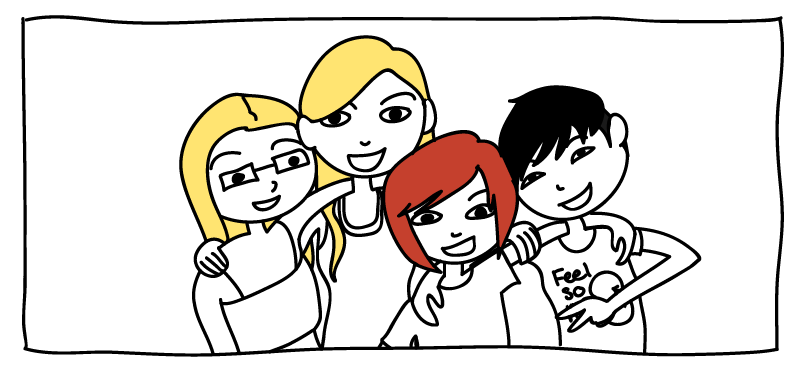
Here's the portrait I promised you guys. It’s still kinda hard to believe how much I lucked out that the first and only ad craigslist ad I replied to turned out to be kick ass people. Thanks for sharing your house and animals with me. During these three months I’ve gone from scared shitless of dogs to really loving all the animals in this house. Also, I think my cat allergy isn’t as severe as I thought it was. Thanks for also showing me that life doesn’t end after 30. Oh, and Bonnie, thanks for the chocolate moose, mouse, mousse.

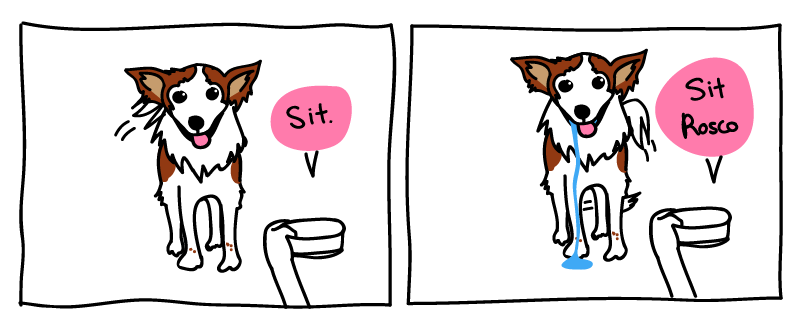
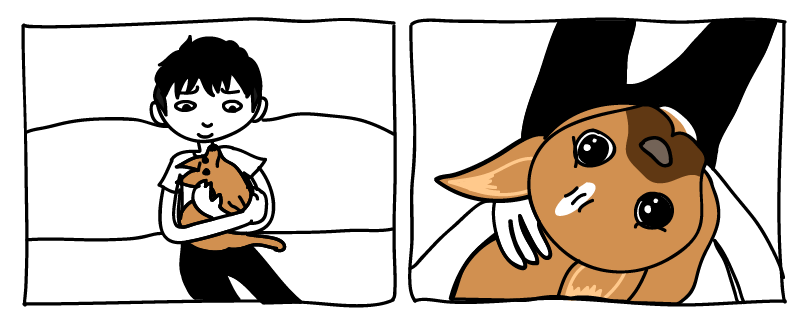
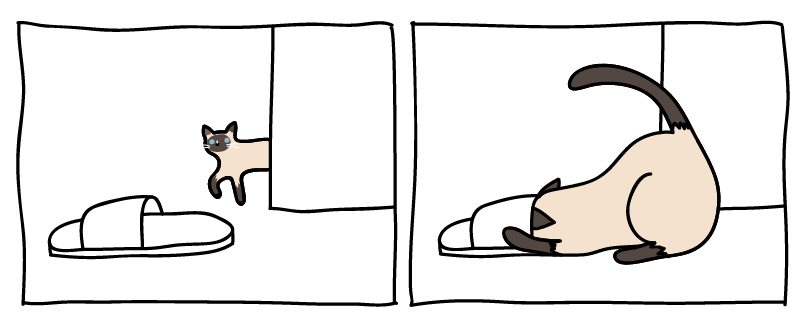
I’ve compiled a “best of the animals” series:

Choya (Cholla?)

Rosco


Daisy


Riley


Rose

Kitty Boy


:)

Saturday, August 22, 2015

Sorry, blame it on me


Sometimes I get in this funk where I’m constantly apologizing.

I bump into a desk. “Sorry.”

Someone’s waiting for me to finish filling my water bottle. “Sorry.”

Someone’s makes a joke about something I did. “Sorry.”

I have a question I need to ask. “Sorry.”

And I hate it. I like to think that I’m a genuine person. For the most part I’ll tell it like it is. I have my own set of values that I feel are important to adhere to. I am chaotic good.

But recently I’m dropping apologies at every chance I get, and I’m pretty sure 90% of the time I'm not actually sorry about what I did. The insincerity makes me feel gross when I’ve realized what’s happened and it made the times when I’m actually sorry mean so much less.

And I can’t help it. It’s like a reflex right now. Anything negative that comes up makes my throat tickle and cough up an apology.

I think it has to do with where I feel like I sit on my mental totempole. When I’m at Olin and with other students, I feel like I’m an equal. When I’m at Olin and with my professors, I feel like I’m an equal. When I’m at Olin, I feel like other people will take me seriously (or not seriously cause I’m haha funny).

This summer I’m the intern. I’m sitting pretty low on my mental totempole. I keep quiet because I don’t feel like my opinions are as valued. I work extra hard on writing down my opinions and supporting facts before I open my mouth. I raise my hand like a freaking highschooler. I feel like I need a solid wall behind me to push against when people are dismissive because ‘you’re just the intern’. And at some point I’ve adopted that mentality, I’m just the intern. It feels awful.

So yeah, I’m pretty sure that’s why I’m in this rut. “Sorry” is actually short for “sorry I’m the intern but,”.

Hopefully I’m going to curb this nasty habit soon. I’m not actually sorry.

Tuesday, August 11, 2015

The Internet's Own Boy


Yesterday I watched a documentary called “The Internet’s Own Boy,” it was about Aaron Swartz, boy genius, co-founder of reddit, a fierce leader in the campaign against SOPA, and an advocate of our rights in the digital age. Most of the time when faced with stories of 13 year olds doing incredible things, in Aaron’s case he was one of the main developers working on RSS, I’m left to wonder “what am I doing with my life.” But what impressed me more than his seemingly bottomless brilliance was his tenacity in which he tried to change the world.

I remember back (around late 2011) when my favorite youtubers started posting videos about SOPA pleading their watchers to sign petitions. If you're not familiar with SOPA it was bill that would essentially cripple the internet allowing companies to shut down entire websites for extremely loose definitions of copyright infringement (ie. linking to a site with pirated content, posting a cover on youtube, etc). I knew that it was evil and bad, but 16 year old me did nothing about it, not even take the time to sign out one of those petition, however many seconds it would taken, even though I basically lived on the internet. I’m pretty sure some of it was part “I’m just a teenager, what can I do?” and the other, plain lack of education. Back then I had no idea that this crazy bill actually had a very strong chance of passing, that in a year the U.S. could’ve been sent into the internet dark ages.

I don’t think I’ve gotten much better since then either. I’m finally old enough to vote in the next election but all I really know about any of the candidates are the occasional posts that crop up on my facebook feed (usually either about how awesome Bernie Sanders is or taking a jab at  Donald Trump). Now that I think about it, the same rationale could be applied here: “I’m just a single person, what can I do?” coupled with the fact that I really know next to nothing about what platforms our candidates are running on. I really am no better than I was four years ago.

Aaron was focused on huge monumental change, like on a worldwide scale, and here I am just beginning to explore what it means to make myself a better person. I’m still preoccupied with “can I make a living when I graduate college” (the answer is probably, of course…), but Aaron was busy trying to figure out how to make access to information on the internet a universal right.

I’ve gone to two hackathons so far and what I made was “the Olin Orchestraless Conductor” and “Turtlebot.” My mindset going into hackathons was usually “I want to make something cool, I don’t care if it’s useless!” But I think next hackathon I want to try a hand at changing the world.

Wednesday, August 5, 2015

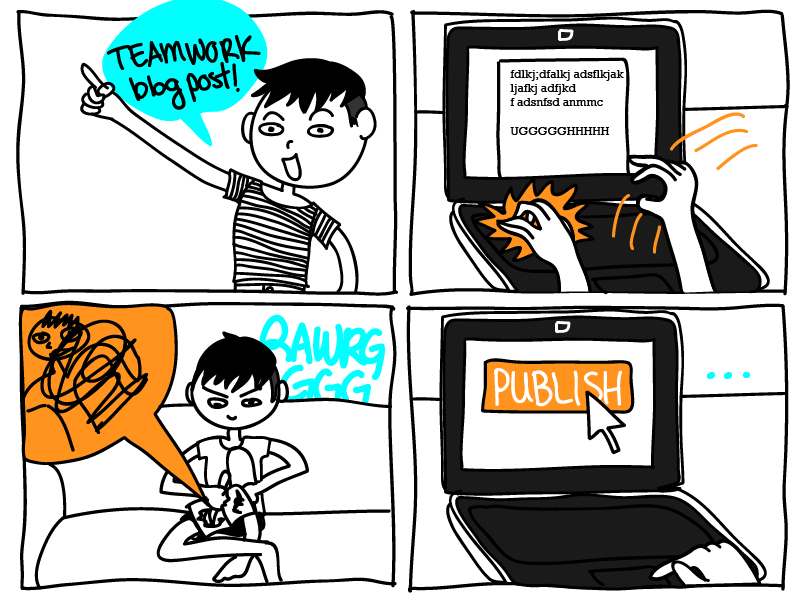
TEAMWORK!

(omg this was way too hard)

If I could make the perfect team, I would not clone myself four times.

As a teammate I’m flawed:

  • I have a strong personality and tend to think that my ideas are superior (“if your idea was better, I would admit it, but it’s not”)
  • I don’t trust people enough. Which leads to
  • I tend to micromanage (and I hate micromanaging, which makes me a crotchety emailer)

to list a few. But this isn’t about my personal failures as a teammate (at least directly), its about what makes a good team (which also makes it harder to write because I’m way better at talking about my opinions).

Lets start off with what makes a team a team. Fundamentally a team is a collaboration between people. If communication only flowed in one direction (ie. down a chain of command) it is not a team. What makes a team more special than, lets say an assembly line, is that a good team is better than the sum of its parts. Kinda like how a well written research paper probably isn’t “you write one part, I’ll write the other, and we’ll combine it on google docs.”

I asked HelpMe (an Olin mailing list) about what their best team experience was and why. Three things stood out from the responses. A good team:

  1. Has a mutual shared interest (ideally it would be the project at hand, but it could also be something like an interest in keeping the team together, or chocolate).
  2. Has diversity: in both opinions and skill sets.
  3. Is baller at communication.

Communication of course is a huge umbrella term for a bunch of interactions but we’ll break it down into several key components:

  1. Respect - Respect for things like my teammate’s time, making sure that I get to meetings on time, and that I respect things like deadlines for completing things that my teammates waiting on. But also just respect in the normal sense, don’t be a butt face.
  2. Trust - At the same time, when the table’s turned and I’m asking my teammate for something (ie. designing the linkage system for a kinetic sculpture) I need to take a step back and let them do their thing. I’ve found that hounding people not only pisses me off but usually pisses off the person getting hounded.
  3. Acknowledgement - Acknowledgement is key for trust to happen. It’s hard for me to trust people on faith alone. Especially when group work in K-12 usually just meant more work. Little things like getting an “Accepted” response after sending a meeting request, small updates in the hall like “I just pushed the code onto github” are important for me at least to keep peace of mind. At the same time I’m guilty of reading an email, understanding what needs to happen, failing to communicate that, possibly causing some anxiety to the sender.

People say that communication is a two way street, which is an okay analogy but I think it’s really more like a four way stop, when you and that other car get there at the same time. The other driver does that nod thing, you bring up your hand like “thanks.” Driving is one of the biggest displays of human cooperation. And I’m off topic.