Friday, August 31, 2018

What am I procrastinating on?


It’s been a long time since my last blog. Partly because there’s just too many things that I want to do, too many things I need to do, and too little time to do. And all of these things are pulling and tugging me in different directions and the end result is more or less I feel like a puddle. I just want to lay here until I evaporate. But anyway I thought it would be a good idea to organize a bit, and maybe that would help motivate me to finish something.


Things that I want to do:


I want to write more. I always mean to write more. I have a list that I keep with different blogs I want to eventually write, topics like: an update on how my Japanese is doing, what it’s like being a hidden (Asian) foreigner, my favorite things in Japan (which is a surprisingly dull list).

Part of what’s stopping me is I have this grand ambition of writing a field guide documenting every year I’ve spent studying Japanese, what worked, what didn’t work, milestones, but it’s just a little outside of what I can handle right now so instead I just plan and dream about it, ha, ha..

I want to draw more. I think I always fancied myself to be an artist, but as a 23 year old it’s a lot different from middle school where every single anime boy you drew got compliments like “omg ursoo good at drawing. Can you draw me something???”

I have this stupid pressure to be “good” (everyone who makes art probably gets it), but in reality I draw way less than I did as a 13 year old. Everyone of my watercolor pieces takes at least a few hours (and usually I’m not even that satisfied with the end result). Also, after getting back from work, arms shaking from using the mouse all day, the last thing I want to do is hunch over a piece of paper weighed down by my own personal expectations of making “good art.”

I want to pass the N1. Which for those who don’t know, is the highest level of the Japanese Level Proficiency Test, and every foreigner’s wet dream. Honestly it’s kinda a bit far fetched seeing that I’ve never taken any of the easier levels. But. Go big or go home right? (And I want to get it over with. None of that, study for the N2, take the N2, study for the N1, take the N1 bullshit. Yes I’m so lazy…)

The problem is that I’m not studying for it... And the times I’ve cracked open a practice test I score around 60% right…

*Just did some research into what counts as passing, and their standards are so abysmal that maybe I can pass...full score is a 60. You need to score at least a 19 in order to pass. That’s like passing with a score of 32%...

Ok, maybe that’s doable.

I want to learn Chinese. Which I’m literally doing nothing for. I keep telling myself that I’ll start after I pass the N1.Which I’m not studying for. I’m thinking about bringing the study book to work so I can do it during lunch. We’ll see how that goes.

I want to get skinnier. “But you look fine” my friends all say. But we all know that we look into the mirror and everyone has gripes that no one else cares about. I’m going to the gym about three times a week. It pretty much siphons all the time I would spend working on any other of my goals. Changes are extremely incremental, I’d probably get way better results working on literally any of my other goals for the amount of time I put in. So from an efficiency standpoint, I am clearly prioritizing wrong.

Things I need to do:

I need to clean my room. In college we had carpet floors so I never noticed how much I shed. By the time Saturday rolls around I’m always confronted by a shit ton of hair on the floor, a slow migration of stuff from my makeup shelf to my desk, and the appearance of abandoned cups that I haven’t bothered to wash throughout the week.

I need to go to the dentist. I’ve never booked my own doctors appointments before (yes, I know. I am a child…). I haven’t booked my dentists appointment despite musing on it for a couple of weeks. I have these two divets in my teeth that feel sensitive when I swirl water around my mouth. Partly it’s just cause I’ve never done it before. Partly its cause I don’t want to go to a Japanese dentist and have to fill out paperwork in Japanese and have a conversation about my dental hygiene in Japanese. I’ll book it after writing this blog.

I need to make food. Having a cafeteria is really convenient. You get pre-prepared food. You get company to talk to. You have your dirty dishes whisked away by a conveyor belt. I’ve been dealing with this by meal prepping a week’s worth of food, the downside is that I’m eating the same thing for lunch and dinner for the whole week. Luckily it doesn’t bother me too much.

I need to watch Youtube. Or anime, or netflix. Don’t get me wrong, it’s not a chore so much as I need it to feel like a sane human and to destress throughout the week. This season’s Anime I’m watching: Working Cells!, Bananafish, Boku no Hero Academia. And I want to watch season 3 of Attack on Titans but I haven’t had the time.


Yeah so that’s all the stuff I want/got to do. If you’ve made it this far, hooray I guess? You should probably get off the toilet seat now.  I’m gonna make lunch and book my dentist appointment.


Sunday, April 8, 2018

Jiaying tries to explain the blockchain

What is blockchain and what does it promise?


From what I understand, a blockchain is a database that is stored on a distributed network. Changes in the database, which can also be called transactions, are stored on the blockchain as blocks, which are linked up in chronological order (like a chain) creating a timeline. By going back in a blockchain you would be able to look at all of the changes/transactions that happened during the history of the blockchain. You can only add new blocks, you can not change previous blocks.
Analogy: It’s kinda like the version history on google spreadsheets, you’re able to see all of the changes that have occured since you’ve created the document, and multiple people are able to add their changes
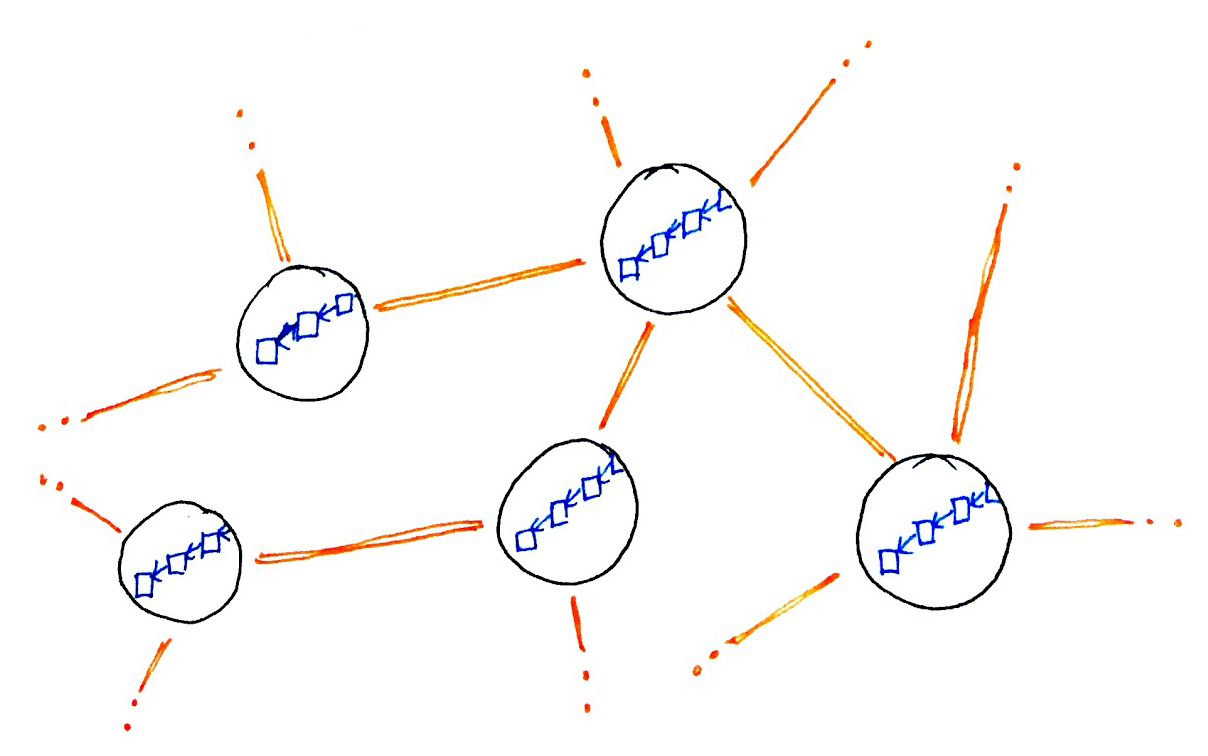
A blockchain is not meant to be stored on a single centralized server, if you want to participate in editing the database, you will need to download a copy of the blockchain and serve as a node in the network. Nodes in a blockchain network talk to each other in order to verify that everyone’s copy of the blockchain is the same (and not tampered with) and notify each other of new blocks that have been added to the blockchain. This system allows every participant in the blockchain to know that the previous blocks are not being edited. Every node gets to send transactions to every other node without having to go through a central entity.
A simplified node diagram
Analogy: I need to pay my rent ($1000), I have an account with bank A, my landlord has an account with bank B. Bank A needs to debit my account $1000, send this money to bank B, and bank B will then have to credit my landlord $1000. This relies on all of us trusting that at each stage of the transaction no one is fucking the other person over (because we’re not trucking $1000 dollar bills from bank A to bank B). If I was paying my landlord using cryptocurrency like bitcoin, I would just send my rent to them from my node to theirs, and as the transaction is being sent across the network, every node would verify with their blockchain that nothing fishy is going on.
Me before you (blockchain)
The use of blockchain promises:
Security - The anatomy of a blockchain makes it difficult to edit previous blocks without invalidating all subsequent blocks, this prevents hackers from changing the data. Because all other nodes are cross checking with each other’s copy of the blockchain, edited blockchains will also be rejected by other nodes as fraudulent.
Privacy - The data on all blocks are encrypted, which anonymizes who’s sending what to who.
Decentralization - Because the data is not stored on a central server somewhere, no central institution has control over the database (unless of course they own all the nodes on the blockchain)
Trust - Which becomes unnecessary since the blockchain algorithm will make sure that no one is making fake transactions (ie. paying someone money that we don’t have).
Reduction of Bureaucracy - It simplifies transactions and can reduce costs by cutting out the intermediary infrastructure needed to support peer to peer transactions.

Anatomy of a blockchain and how it works

A blockchain consists of blocks. These blocks are linked together chronologically.
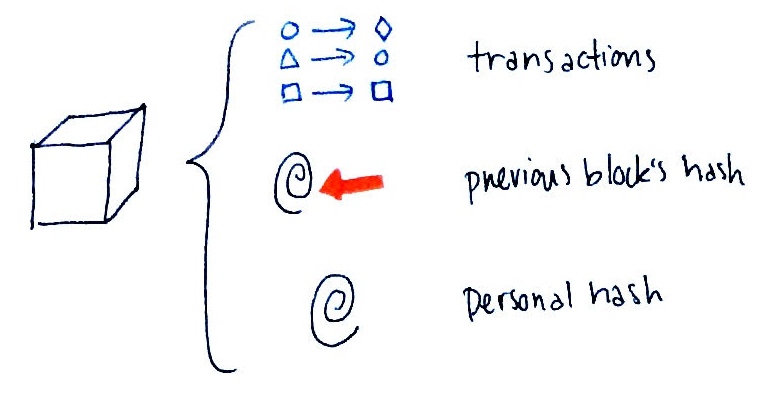
Each block has:
Transactions - Theses are the changes to the database
Hash - This is a fingerprint uniquely identifying the block and it’s contents
The previous block’s hash - This is what chains one block to another
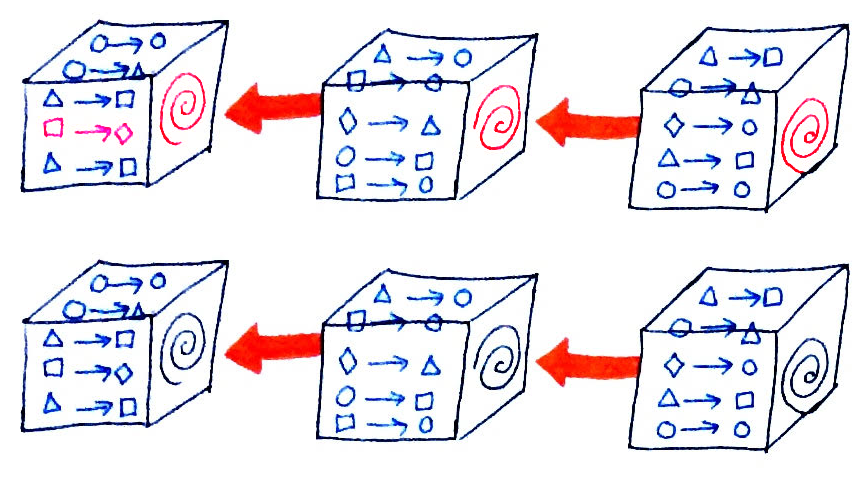
This is what a simple blockchain would look like:
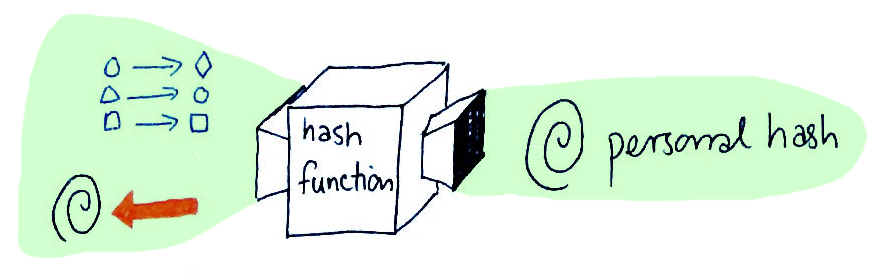
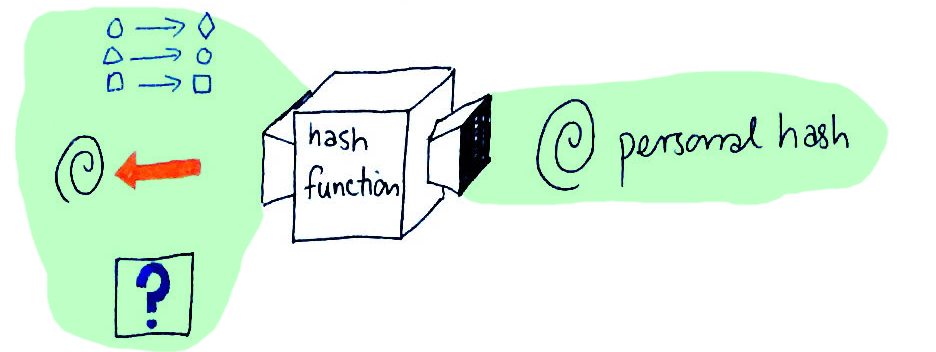
The hash of each block is basically the encrypted information on the block. To generate a hash you would feed, the transactions and the previous block’s hash into a hashing function, which would then spit out a unique hash.I’m depicting it as a pictorial fingerprint, but a real hash would look something like this:
28902a23a194dee94141d1b70102accd85fc2c1ead0901ba0e41ade90d38a08e
This hashing function is deterministic, which means that editing any of the input would change the output hash.
If you edit a transaction in a block, it will change it’s hash.Because blocks are linked to each other by their hashes, changing one block’s hash will change all the subsequent blocks’ hashes as well. Your blockchain is now completely different from any other node’s blockchain, which will result in them rejecting your changes.
Blockchain 1: “Why won’t you accept me? D’:”
Blockchain 2: “Because we come from two different hashgrounds”

So why’s people so hyped on bitcoin? Cryptocurrency and mining

So...honestly I feel like most people hyped on cryptocurrency don’t really know or care for its benefits (for list of benefits read section “what is blockchain and what does it promise”). Many people are just hodling onto the cryptocurrency waiting for it double and triple its price before selling it for the mad cash.
The reason why I feel it hasn’t swept the world by storm (or at least the bubble in which I live in) is that it doesn’t really address most people's needs. I trust my financial institutions not to fuck me over (maybe naively you might say), the places I shop don’t take bitcoin, and it’s too volatile as a currency.
Maybe cryptocurrency will take hold in places where the government and institutions can’t be trusted, but I don’t know.
Anyway, one part about bitcoin I never understood was
What the hell are these miners and what are they mining?
So one feature of bitcoin is that it has these bitcoin miners. Bitcoin miners are nodes that verify transactions and add them to a block, these blocks get added to the blockchain once that block is verified by other nodes. As a reward for verifying transactions and adding a new block, miners are rewarded with new bitcoins increasing the whole bitcoin economy. Right now miners get a reward of 12.5 bitcoins (which is approximately $150,000).
Because bitcoin is a currency, you can’t just flood the market with a ton of new bitcoins. That would screw up the value of each individual bitcoin. Which is why bitcoin’s algorithm only allows one new block to be added every ~10 min.
There are tons of these miner nodes competing to create the next block (and earn bitcoins), so how is only one created every 10 minutes? The algorithm does this by adding a layer of artificial difficulty by only accepting blocks with hashes that fit a certain requirement (ie. a hash that starts with n number of zeros)
000000cdccf49f13f5c3f14a2c12a56ae60e900c5e65bfe1cc24f038f0668a6c
In addition to the base hashing function inputs (transactions & previous block’s hash), miners also put in a third input, a number (which basically functions as a guess), which will hopefully generate a hash that fit’s the algorithm’s requirement.
These miners repeat this process 1,000,000,000,000,...s of times to find an acceptable hash
You need really powerful computers in order to mine bitcoins because it’s so astronomically impossible to find an acceptable hash. These computers also are super resource hungry. Currently bitcoin miners use as much electricity as the country of Algeria does in a year. Which is definitely bad for for the environment.
Eventually this energy consumption should decrease (or so people say) since the end total number of bitcoins in circulation will be capped around 21 million. Miners will be getting less and less bitcoin reward for each successful block, which will decrease incentive, decrease competition, and the algorithm will adjust the hash requirement to be simpler (less zeros).
But yes for now verifying bitcoin transactions are actually a lot slower than verifying credit card transaction. And it’s also destroying the environment with its carbon footprint.
What is a coin vs. token?
So one thing that was super confusing for me was what’s the difference between a coin verses a token. Quick googling seems to indicate that coins’ primary purpose is to work as currency, while tokens are a more generic counter system.

So why would you want to use blockchain?

So I get the appeal of blockchain for the anarchist type person (screw central powers of authority), but decentralization itself can’t really be a driver for big corporations to want to use blockchain right?
Well it does seem like there are several other benefits of blockchain for businesses.
  1. Prevent hackers and security breaches
  2. Make record keeping more automated (and reducing
But what I don’t get is how exactly do blockchain companies make money, if people are making peer to peer transactions, and skipping out on paying the middleman. The incentive to create a platform/software that facilitates direct transactions would have to come out of the goodness of their hearts right? What exactly is the blockchain business model if you employ the fundamental basics of the blockchain’s benefits?

Non crypto-currency examples of blockchain applications:

I was going to compile a list of non cryptocurrency examples with long explanations, but I figured other people have done a good enough job:

Thursday, January 11, 2018

Mourning for my adolescence

It’s been awhile since I’ve last written a piece for my blog, but they say that if you love something, you’ll never truly leave it. It’s like an itch, that sooner or later I would come back to pouring my thoughts and feelings into the vast expanse of a google document. Also it’s just a time of big transitions in my life, and I’m not entirely sure how I’m feeling, but it always seems like by the time I finish writing a blog, somehow the loose ends of my thoughts wrap up somewhat nicely.


So main transitions going on right, is one, moving to Japan, and two, moving to adulthood. After landing at Haneda airport I took the train to the station nearest to my new apartment. I was sitting on the train, gripping my luggage, looking around, and I just had this really strange feeling. It felt like very familiar moment, millions of colorful advertisements fighting for my attention, and me, staring hazily trying to decipher what they’re trying to sell me in my jet lagged state. But at the same time everything felt really foreign, and I couldn’t put my finger on exactly why I was feeling that way. I stared outside the window watching the landscape woosh by and in my head I felt like it was very, Japanese-poi, or Japanese like. But it didn’t feel entirely like I was here in Japan either.


It’s been a few days since then, and even now I still feel occasionally disoriented. There hasn’t been a decisive moment where I’m like, “yup I’m in Japan now” even though all the cues are screaming that I am no longer in America. Moving to a new country is tough, but right now what I think I’m having the most trouble with is coming to grips with adulthood.


It’s not really any particular aspect of it, moving to a new apartment, not seeing friends, going grocery shopping, cooking, working, figuring what to do with my spare time, I’ve done all of those things before, but still nothing has ever felt so final as it feels now. You know, like this time it’s for real. And that I think is what scares me the most. That when fall rolls around I won’t see my friends, there’s no winter break for me to bum around at home, and also just the realization that everyone is diverging living their own separate lives. That no matter how much effort you put in to things to keep in touch, and no matter how well your efforts are rewarded, it will never quite be the same anymore. And that too, scares me.

Everything is so unfamiliar. Maybe it just takes time. We all get thrust into adulthood, and maybe the truth is that no one is ever quite ready for it. Maybe it’s a matter of treading water now and eventually a sense of normalcy will return. And hopefully even though things won’t ever be the same again, that the new doors that open will be as much, if not more, enthralling.

Wednesday, September 27, 2017

Tired

Hey guys, recently I’ve been trying to grow my instagram account instead of applying to jobs. Not sure I’m using Instagram as an excuse to create art or if I’m creating art as an excuse to post on Instagram.

It’s not going terribly well, followers are climbing at a snail's pace, but despite that I find myself checking my phone frequently just so that I can occasionally see that heart button on the bottom bar notifying that I’ve gotten a like. More than ever I feel myself wanting some kind of recognition, to feel valuable in someone else’s eyes, and when I’m unemployed living at home isolated from my friends and classmates it feels like the only people I can turn to is the internet.

Anyway, this is a story about unemployment. I feel alone in this endeavor, though I know I’m not alone. We try to hide our failures because we can’t help but feel lesser for not having found something yet. Some of our friends were hired long before second semester started, some were uncertain until only weeks before graduation, the stragglers slowly trickled in their success via facebook posts over the summer, and as the seasons turn from hot to unpredictable, we are left and silent.

We stay silent for a variety of reasons, part of it is shame, part of it is there’s only so many times you can complain to your friends until your pain grows dull in their ears and numb in your own heart. We’ve probably tried a lot of things, applying online, asking our acquaintances to hand in resumes, going to industry events, emailing alumni, grinding our faces into our tempurpedic pillow as we scream profanities. And even though we know the paths we’ve chosen is difficult and has fewer jobs, there’s really only so many times you can finish the rare phone interview only to have the trail go cold before you start wondering ‘is there something wrong with me.’ It’s gotten to the point where I’ll just assume that won’t get the job even when the conversation goes well.

I wish I could offer you words of consolation, and tell you that everything will be okay. I wouldn’t wish upon my worst enemy the hell of a indefinite job hunt. But I don’t know, I don’t know for myself, I don’t want to give you kind but empty promises because you, like me, are tired.

For me what would give me a little solace would be if we could somehow get together and communicate, because I’m tired of keeping this shit to myself, and maybe you're tired too.

Thursday, September 14, 2017

[Book Review] The Rape of Nanking, Shelter, & The China Mirage

I never really had the time to read during the school year, so over this past four years I’ve been consolidating a list of books that I’ve been wanting to read. I figure a lot of you guys are looking for new reading material too, so I want to offer my general commentary on the following.


There is a sort of theme going on with the books I chose to review here, The Rape of Nanking and The China Mirage are both non-fiction concerning WWII and post-WWII China, and Shelter is a novel with a Korean-American main character reconciling his current mess of a life with his upbringing as an Korean-American.


The Rape of Nanking by Iris Chang


Growing up I’ve always heard from my parents that China hated Japan because Japan invaded China during WWII. The conversation never really went much into detail besides that. It also never felt personal, my parents did their PhDs in Japan, my dad always gushed about Japanese manufacturing, I grew up with lots of Japanese pop-culture influences like manga and music. But given the fact that I am a Chinese-American that has visited and lived in Japan numerous times I felt like I had an obligation to try to understand this history.


The Rape of Nanking describes the event of Japanese invasion and occupation of Nanking which was the capital of Chiang Kai-shek’s Republic of China. Iris breaks down the novel into before, during, and after the occupation from the Chinese, Foreign, and Japanese point of view. It’s kind of hard to describe the magnitude of this massacre,but it would not be a stretch to say that it was comparable to the holocaust, if not even more brutal, concentrated in a smaller area, over a much shorter period of time (the book makes this comparison). Despite this I don’t remember learning about the Nanking Massacre in school, maybe partly due to the Western-centric lens the American school system uses, but also Iris describes a huge cover up by not only the Japanese government, but also the American government in trying to rebuild Japan as a Asian ally after Mao Zedong’s communist government took over China shortly after the end of WWII.


Verdict:


It was a really good read, organized in a way that makes the information extremely easy to parse. I recommend this book for people who want to be more educated about a terrible part of history that has been largely relegated to a single line in textbooks, for people who want to learn more about Chinese-Japanese relations, and for people like me who want to understand a little more about their Chinese roots.


Shelter by Jung Yun


Most books I read aren’t really about people like me, there’s something about growing up Asian-American that is different from how main characters in most novels go about their lives. Shelter is about a Korean-American guy who get’s his life flipped upside down when his mom stumbles into his backyard naked, disheveled, and distressed. Throughout the book he is forced to his strict Korean upbringing and examine his relationship with his parents. It has Asian-American themes but even without that it’s a solid novel that gets you hooked pretty quickly and has decent pacing throughout with no lulls. I would tell you more but then I’d be spoiling the plot...


Verdict:


I liked the novel despite fiction not usually being my cup of tea. I was really impressed by Jung’s mastery at describing people, actions, and the setting (I have no good words to describe how good she is at describing). I recommend this for people who enjoy fast paced melodramatic stories, and other Asians who want to read something where they’re better represented.


The China Mirage by James Bradley


I feel like media portrayal of China in my lifetime has always been on the negative side, which was why I was really surprised finding out that in the early 1900s Americans loved China. Not real Chinese people who were the only ethnic group targeted by official legislature (The Chinese Exclusion Act) to be deported and kept from immigrating to the U.S., but a dreamy ideal of a far off Chinese peasant that longed to be westernized and converted to Christianity by their American saviors. It starts with America’s history with China starting from the Opium wars where Western drug dealers illegally smuggled Opium into China in order to turn a huge profit from getting Chinese people addicted to the drug while simultaneously bringing China’s riches (tea, silk, porcelain, etc) to the Western world. It then covers America’s leaders funneling millions of dollars in support of Chiang Kai-shek’s failing Republic of China due to the perpetuation of “New China” with its Christian Chinese population via ignorant propagandists (like Henry Luce of Time Magazine) who never set foot in China. And finally it covers post war communist China, the red scare, and the Korean and Vietnam wars, with commentary on how U.S. and China relationships got so bad.


This book really helped me understand why America and Chinese relations are so terrible, why China is always portrayed as the bad guy in the media, and where general anti-Chinese sentiments have grown from. It has changed my views on Mao Zedong and communist China who earned the trust of the Chinese peasants, offered them better lives, and improved the state of China at the time (though I don’t know enough to judge about his later rule and the cultural revolution).


Verdict:

I did find it on the longer side, especially the middle section where they were talking about FDR’s secret air force in China, I ended up skipping two or three chapters there. But it was still extremely enlightening read, and I recommend it for people interested in U.S.-China Relations, understanding why China became communist, and understanding why the U.S. got involved in Korea and lost in Vietnam.

Saturday, August 12, 2017

Reverse Culture Bummers: Coming back to the states

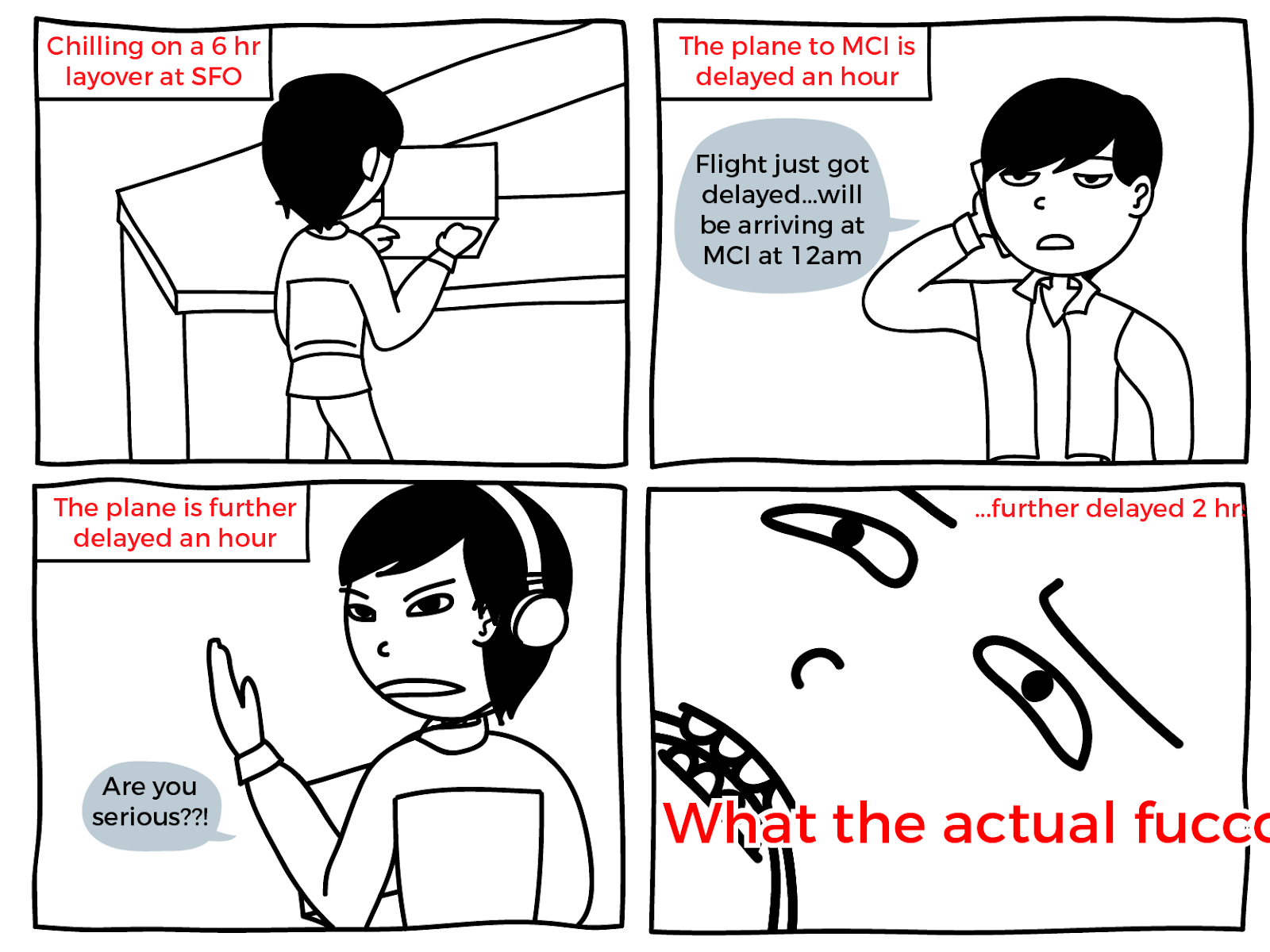
My frustrating experience at the San Francisco Airport after consecutive delays in the 3rd and final leg of my international flight back home.

People talk about getting “reverse culture shock” when they come back from a foreign country, but today what I’m experiencing is more like “reverse culture bummer,” the “oh yeah I forgot that America was like this.”

So first some updates on my life. I just finished my internship at Mitsubishi Electric in Japan (2 months) and traveled around Hiroshima for a few days with my friend Jee, and now I’m sitting at San Francisco Airport for a 6 hour layover before my flight back home (now turned 10 hour layover due to multiple delays). Anyway coming back to the states from Japan I’ve been experiencing a series of reverse culture bummers, ones that I don’t really remember experiencing the first time I came back to the states from Japan (study abroad at Tohoku University 2 years ago).

Language

I thought I would revel in the awesome feeling of being about to understand everything around me effortlessly. But walking around the Airport it just reminds me that TSA agents hate their job, and that people have really boring conversations with each other.

Airports

Wow I freaking hate airports. But especially airports in the U.S. For some reason security lines in the U.S. always take way longer than any other airport that I’ve been to. To give some perspective, there was literally no security line the two times I tried going through Haneda International Airport (one of the busiest airports in Japan). The first time I accidentally just waltzed through the metal detector with my jacket on, things in my pocket, totally unaware that it was a security gate and had to get a pat down.

At other airports I get to keep my shoes on and don’t need to chug all my water before going through the screening, making it through the place in record time. Also all the TSA agents here look grouchy AF. Nothing like doing a 13 hour flight only to be greeted by pissed off immigration officers. I get it, your job sucks, but my flight sucked too.

Customer Service

So this is totally related to the grouchy TSA agents, I’ve been spoiled by Japan’s customer service culture. Everyone smiles at you, speaks very politely, bows and even thanks you for asking them questions. Fast forward to me going through security in SFO where I go through the body scanner and like always my left ankle triggers the machine and I need a pat down on my ankles. The dude TSA agent is like, “can you pat her down” and the female TSA agent is like “haha, are you sure it’s not a dude,” winks at the dude TSA agent, turns to me, goes “haha, sorry,” like somehow I’m in on her joke. I manage a sardonic smile.

Like I get it, I got short hair, and I’m wearing baggy clothes, but there was a million ways to go about  confirming who gets to pat down my ankles without being a dick about it. It’s great that you get to get a laugh, but it’s really coming at my expense and I kinda dislike that.

Toilets

I think the first feeling that I was like “yep I’m in America” was when I walked into the bathroom at the baggage claim area. On the way to picking a stall I walked past three unflushed toilets, and one with a bloody diaper floating on the surface. You’re not really in America unless you need to flush someone else’s mess and hover pee in all public restrooms.

Maybe you’ve heard of the high-tech Japanese toilets that have bidet functionality and the ability to sing waterfall sounds to mask the sound of your pee hitting the water. But that’s not really what I care about. I think in my entire time in Japan I’ve only really seen one or two unflushed toilets. I even got used to sitting on toilets in public restrooms. Everything always felt so clean. The toilets in my company had floors so pretty that I wouldn’t freak out even if I dropped my phone on the floor.

Now I’m in America where all public bathrooms have auto flushers installed to thwart the nonflushers, but what really ends up happening is that they don’t work when they need to, and they flush when I’m still using the bathroom resulting in maximum grossness.

Cleanliness
One thing that always annoyed me about Japan was the lack of trash bins. This meant that I’ll be walking around the entire day carrying my trash in my shoulder bag. Despite this Japan always felt spotless. There was no litter on the floor, there wasn’t a bunch of chewing gum stuck on the pavement, do Japanese people not litter??? The answer is, no, they still litter. In the morning I’ll see a bunch of people walking around with tongs picking up last night’s litter thrown away by drunken salary people.  But then for the rest of the day it remains spotless until people start drinking at night. There was still the occasional abandoned plastic drink cup or wrapping paper, but for a country with a lack of public trash bins, there is not a lot of litter.

Right in front of me, as I’m typing, I’m surrounded by trash on the floor. A dirty napkin, a subway receipt, the top part of a cough drop bag that someone ripped off, a few unidentifiable paper scraps, and old gum that’s been blacked from being stepped on so many times. There are plenty of trashcans in the vicinity. Why the hell is this place so dirty despite having a trash can around every corner!!! Why!!!

Just now a skin head dude with tattoos walked over to one of the charging desks and tossed his trash into the corner of the table. Why, couldn’t you just walk to a damn trashcan? It is probably equidistant…ugh. Update: just watched another guy put an empty altoid tin down in the same area…

Before I sat down I took out some sanitary wipes to wipe down my seat. There was an unidentified brown smear that I refused to subject my pants to.

Hopefully in the next few days I’ll be reminded of reasons why I like living here. But for now it’s just a series of reverse culture bummers.

Monday, July 10, 2017

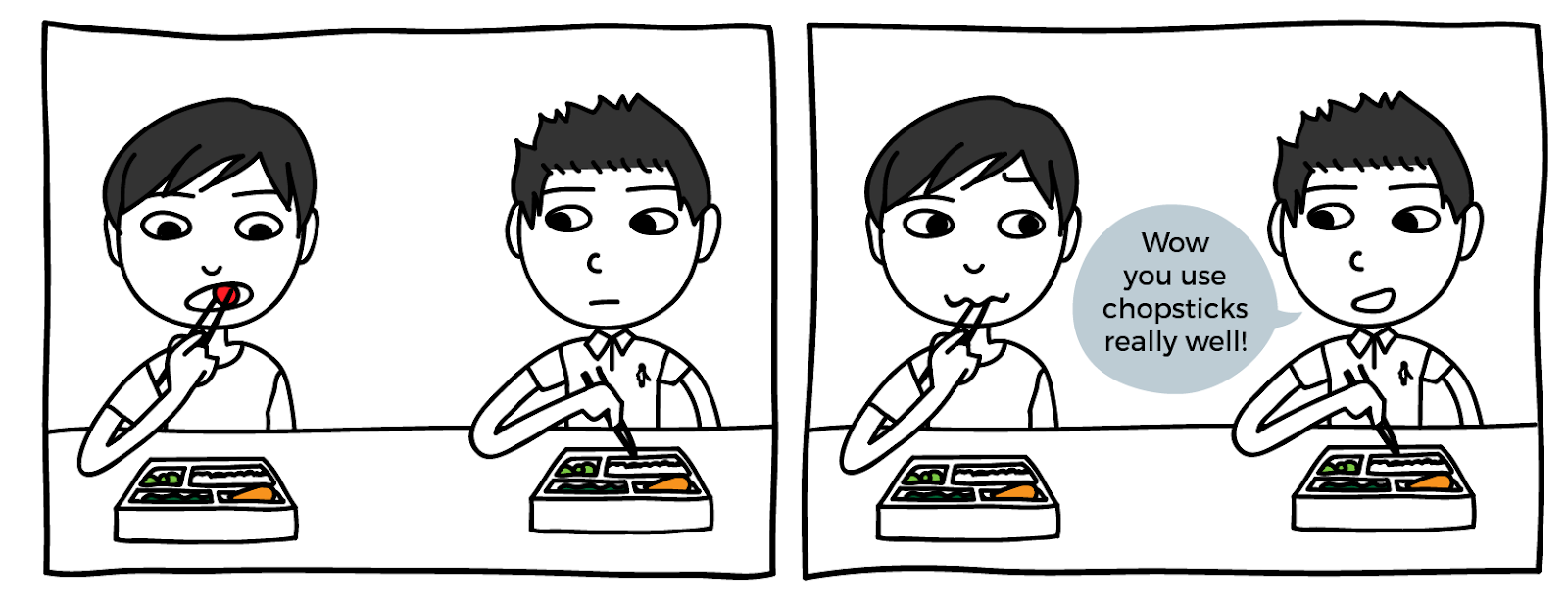
Wow you use chopsticks very well!


Wow you use chopsticks very well!

This is one comment that I’ve gotten in Japan multiple times that I find entirely puzzling. For me growing up, all I’ve used at home was chopsticks. I eat with chopsticks, I cook with chopsticks, I… can’t think of anything else I do with chopsticks.

It was weird for me that even with my asian face, and my Chinese name, the thing that people were really impressed by is my skillful chopstick manipulation. I asked someone about it once, and they said… yeah if we think about it logically other asian countries do use chopsticks… I guess we just don’t think really about it, that people outside Japan use chopsticks.

Fair, I guess. Anyway this lead me to thinking more about what other questions or comments that I got pretty frequently. (Oh yeah if you’re not caught up in my life, currently I’m doing an internship in Kamakura, Japan and will be here for another month).

For the most part conversations topics are pretty normal, but limited to a very small set of questions. No doubt limited by my inability to speak Japanese well, despite the other person trying their best to talk to me in English. I’m meeting new people all the time, so I would say most conversations are just a permutation of the following set of questions just with different people (plus other things like: what are your favorite hobbies, and do you like Japanese food).

Where are you from? I’m from America.

Which part of America? Boston, I go to a small college called Olin.

Ohh Olin I know that place. This is where I’m internally going wat? Most people in the U.S. don’t even know about Olin, why do you know about Olin?

We’ve had people visit Olin before. And this is where I remember that they send people to our school’s final exposition sometimes so it’s not that weird that they know of Olin.

Is this your first time in Japan? Nope, this is my fourth time. I think almost every person I’ve talked to has asked me this. To the point where I wonder if I ask other people if it’s the first time they’ve been in the U.S. People usually get pretty surprised when I tell them it’s my fourth time, I guess for most interns this is a rare opportunity to travel around Japan.

What are your hobbies? I like watercoloring. I keep it simple so that people don’t immediately find out I’m a huge nerd.

Do you like Japanese food/ what’s your favorite Japanese food? It would really suck if I was in Japan and didn’t like Japanese food. I also have a really hard time answering any questions about favorites. Partly because I don’t think about things like favorites very often, and partly because I become ten times slower when thinking in Japanese.

Wow your Japanese is so good! Is a compliment I get a lot, and I know that people are extremely sincere when saying that, but I can’t help but feel kind of bad when I hear it. It’s because I know in my heart that my Japanese is kind of shitty and that’s the source of the majority of my troubles here.

Also it feels like something very cultural. In the U.S. I don’t give a second thought about how good people’s English is. When exchange students speak English it doesn’t feel out of place at all, in fact I would find it utterly strange if they didn’t. I don’t compliment non-native speakers on their English even when they are practically fluent. The only times I would compliment them would probably be if they told me that they were sorry their English was bad. It makes me think about how much I take for granted that people all over the world learn English as a second language and how so much of the world accommodates English speakers like me.

I’ve been in places in Tokyo where retail staff would speak English, I’ve seen tourists walk into restaurants and order food entirely in English, the subway signs everywhere have English subtitles. But I can’t imagine the opposite even remotely flying in America.

Anyway, I continue to study Japanese. I’m still bad. But I am slowly (very slowly) trying to speak more Japanese, trying to feel more comfortable, trying to make progress. And progress is being made. But it’s definitely very difficult seeing any improvements on the microscale.